In this article, we explain what NMN is and how the EFSA assesses NMN.
What is NMN?
NMN, or nicotinamide mononucleotide, is a natural molecule found in every living cell in the body. It is a precursor of the molecule NAD+, which plays an important role in energy metabolism and cell function.
Why is NAD+ important?
NAD+ is abundant in mitochondria, the cell cytoplasm and the nucleus. It is crucial for regulating cell growth, energy metabolism, stress resistance, inflammation, circadian rhythm and nerve cell function.
The body converts NAD+ from sources such as NMN, tryptophan, nicotinic acid, nicotinamide riboside and nicotinamide. These NAD+ precursors are found in small amounts in natural foods, such as cow's milk, vegetables and meat.
The average NAD+ concentration is several times lower in adults than in newborns. This decrease in NAD+ levels is attributed to:
- Diminished synthesis: the body does not produce as much NAD+ as it used to, contributing to the drop in levels.
- Increased consumption: the body consumes more NAD+ than before, also contributing to the drop in levels.
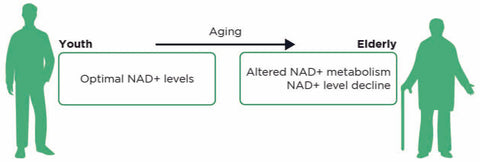
Reduced NAD+ levels are associated with a host of features of ageing.
What is the status of NMN in Europe?
In November 2022, the European Commission assessed that NMN is an unauthorised novel food whose safety needs to be investigated first.
According to EU regulations, any food not consumed "to a significant degree" before May 1997 is considered a novel food. This category includes new foods, food from new sources, new substances used in food and new ways and technologies to produce food.
NMN is only authorised when the European Food Safety Authority (EFSA) has assessed the substance NMN as safe. EFSA carries out its safety assessment based on dossiers provided by applicants. The dossiers must contain data on the composition, nutritional, toxicological and allergenic properties of NMN, as well as information on the respective production processes and the proposed applications and use levels. This application process is very costly for the applicant and has a lead time of years.
Fortunately, there is good news! In March 2026, based on the data provided, the EFSA concluded that (1)
- β-NMN is safe for adults, with the exception of pregnant women and women who are breastfeeding.
- β-NMN is a bioavailable source of nicotinamide.